Yearly Archives: 2014

Digital Products

Digital Products Are Changing The Landscape of Finance

Digital Products

Finance, both personal and otherwise, has long been an esoteric field, its intricacies walled off from those on the outside. But the way people consume financial services is changing, with ever-expanding digital capabilities more and more accessible. Writing for TechCrunch, Pierre Brais, argues that the stranglehold that the old world of large financial institutions has on these services is rapidly eroding.

Brais, a venture capitalist and founder of Olocode, a digital business card sharing platform, sees the disruptive forces of the internet radically reshaping the way we purchase and consume financial products. This democratization, in Brais’s view, will lead to continued innovation and lower costs.

Consumer Trust

Prior to the financial crisis, consumers and regulators alike were wary of trusting new entrants into the financial sector. But since that time, trust has shifted away from the big banks. Brais points to the JOBS Act and the FSA restructuring the U.K. as just a few of the ways that the landscape has become easier for startups offering financial services. Ironically, many of those entrepreneurs who are putting these products to market are former employees of the big banks, who understand the limitations of the large corporations.

Money Going Digital

Mobile payments served as the first wave of digital financial products on platforms like Square or Braintree, but companies like Dwolla and TransferWise are pushing towards money transferring and foreign exchange. And with digital cryptocurrencies such as bitcoin gaining traction, consumers are showing clear signs that they are becoming more comfortable with keeping their money within the digital realm. Large banks can be slow to respond to this rapid level of evolution that we are seeing in the digital finance realm.

Digital Currency Can Obviate Big Banking

Some predict that the third wave of digital finance, digital currency, can make the big banks obsolete. While such a bold prediction still lies entirely within the realm of speculation at this point, what is clear is that digital banking and digital finance has a way of eroding the need for an intermediary between savers and lenders, the primary function of the banking system. Brais predicts that more and more customers will be empowered by the nimbleness and freedom afforded by digital financial products, making it harder and harder for big banks to maintain control over finance.

Read more at TechCrunch.

 

Credit Cards

Trend Fluctuations Among Credit Card Consumers

Credit CardsIn a recent report, creditcards.com found that interest rates on new credit cards offers are the lowest they have been in the past 5 months. The current 15 percent interest rate has fallen from its  two week streak of 15.09 percent. Credit card companies have also shown more leniency towards borrowers by giving them a second chance to to receiving larger credit limits, despite their credit pasts.  

Late payments on credit cards have also decreased in recent years. This particular consumer trend is due to a widespread knowledge of understanding the consequences bad credit can have on your future, as well as stricter regulations on who is able to apply for a credit card. In addition to these changes, credit card companies have also developed scoring methods that can indicate which customers will have delayed payments, and which ones will pay on time. 

The improvement of our economy is another factor of why consumers are now applying for more credit cards and consciously trying to improve their credit. Despite the willingness to purchase more big ticket items, the fear of acquiring additional debt is still present among Americans. As of late September 2014, total debt went up to 1.30 trillion dollars, including car loans, mortgage, and student loans. These statistics show that debt is present among diverse collective of age groups and communities.

The increase in debt has a positive correlation with the amount of credit cards that were opened this year. Since January 1st, the Federal Reserve’s reported a $ 22 billion increase in credit card balances across the board. The future of credit  cards depends on a few factors, starting from fluctuations in our economy, the uncertainty of the job market as well as constantly increasing college tuitions. In turn, this will prompt credit card companies to respond accordingly by changing interest rates and raining credit card limits. 

Credit Cards

Avoiding Credit Card Debt As a Recent Graduate

Credit CardsA recent article in the New York Times delves into the changing trends among the younger generations and their dissociation with credit cards and the crippling debt that follows. FICO,  one of the largest analytic software companies in the US, conducted a study aimed at understanding the decline of credit card usage among the ages of 18-29. They found that from 2005-2099 there was a 7% decrease in credit card purchases.  The study also recognized that older generations are relying less on credit cards, but not with such drastic numbers.


These changes in consumerism have contributed to reductions of the average credit card payments, which dropped from $3,073 to $2,087 in late October of 2013. Despite these changes in credit card debt, this generation is experiencing a devastating increase in loans, which have almost doubled in the past decade. Another reason this age group prefers to use debit cards which make it easier to face for them to face their debts and live comfortably.

There are a few reasons behind the declining trends of credit card usage. In 2009,  the introduction of the Credit Card Accountability Responsibility and Disclosure Act was introduced to the public, and it added amendments requiring applicants to have a stable income stream, which in turn made it more difficult for younger people to become approved for credit cards.

Spending habits among younger generations have also changed due to the Great Recession, and their inability to work full time after finishing school. Financial burdens, such as loans and increasing living standards across the US have made young consumers become aware of the overall economy struggles and their personal financial shortcomings.

Many financial analysts believe that without credit cards this age group will have a difficult time building credit and purchasing future big ticket items such as, a car or a home. However, for those who still cannot afford credit cards, there are other ways to acquire credit. For example, making your regular loan payments on time, and signing up for bills in your own name can help you slowly create a solid credit history. These simple exercises can place students and recent graduates in a good place with their future finances, without rushing into unnecessary credit card debt.

Car Insurance

The Importance of Car Insurance

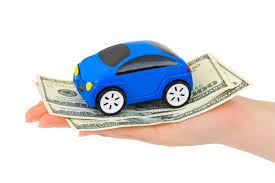
Car InsuranceThe importance of motor vehicle insurance is sometimes lost on people with an impeccable driving record and with those who do not wish to shell out thousands of dollars on annual fees. As an insurance professional with over 20 years of experience in the field, I would like to give an informed  explanation of why we need car coverage and other forms of insurance.

First and foremost, we purchase car insurance not only to protect ourselves but also the people we might harm in the unfortunate case of a car accident. Every state, with the exception of New Hampshire, has in place mandatory insurance policies for car and motorcycle drivers. However, these policies may vary depending where you live and the kind of car you drive. States enforce insurance policies in order to protect citizens from extreme financial loses and damages caused by vehicle and motorcycle accidents. With insurance policies intact, these loses are greatly minimized for the drivers who do not have the resources to cover medical bills and pay to repair physical damages out of pocket. By making monthly payments and annual premium dues, insurance companies are able to absorb a good portion of damages on behalf of their customers. Unfortunately, for many drivers insurance fees tend to increase after a car accident.

Another great reason to purchase car insurance is the high possibility of actually being part of a car accident. Those who have been unfortunate enough to experience this burden are all too familiar with the financial strains that follow an accident. It is important for drivers to be able to protect not only themselves, but also to be financially responsible for the other parties involved in the case that the accident is your fault. Insurance allows people to pay off damages and hospital bills, that would otherwise be too expensive to take on alone. 

One final consideration to take into account when discussing the benefits of purchasing insurance is the ability to protect your assets such as, your car, home and bank savings. Besides buying a house, cars are one of the biggest investments you will make in your lifetime. We will find ourselves paying off car payments for many years, which is why it is extremely important to protect such a significant asset. In many cases, banks require full collision coverage in order to secure full payment loans in case of an accident.

Car Insurance

Choosing Your Car Insurance Made Easy

Car Insurance

Choosing your car insurance is not an easy task. Where do you begin? Do you ask your friends for recommendations? Family? Do you go directly to the most well known company according to recent TV ads? There are a plethora of options, all of which sound appealing in their own way. But with hindsight being 20/20, you won’t truly find out how well your car insurance works (or doesn’t) until you have your first accident.

Luckily, a recent article featured on Usnews.com takes an in-depth look at exactly this situation and shares advice on how to tackle the dilemma.

To start, Jeanne Salvatore, an industry group spokeswoman for the Insurance Information states that”It always makes sense to first ask people who you respect who they have auto insurance with, and if they were happy when they had a claim.”

Another helpful approach is to take to social media. People tend to be brutally honest when it comes to reviewing companies online, so search for posts on Twitter or Facebook using the applicable hashtag for the company in question.

The article goes on to recommend comparing similar policies in an effort to find out what factors may be causing higher insurance rates; policies can vary by level of service, add-ons, as well as length of time. In the same vein, there’s no need to become obsessive and look for the best deal out there. When asked what percentage of magazine readers were able to get a better deal, Jeff Blyskal, senior writer at Consumer Reports, says that only 12 percent of the respondents were able to do so.

Once you have settled on an insurance provider, you are tasked with choosing the various details of your policy. There are numerous add-ons to review but at the end of the day, the more you pay upfront, the greater your coverage will be. So make sure that you have considered all hypotheticals and are comfortable with the coverage your insurance policy will offer in each possible event. For example, if you think of yourself as a careful driver, you may opt for a higher deductible in order to minimize your monthly rate.

Lastly, remember that insurance policies do not fall under the one-size-fits-all umbrella; so whatever policy you end up choosing, make sure it meets all criteria that are paramount to your needs.